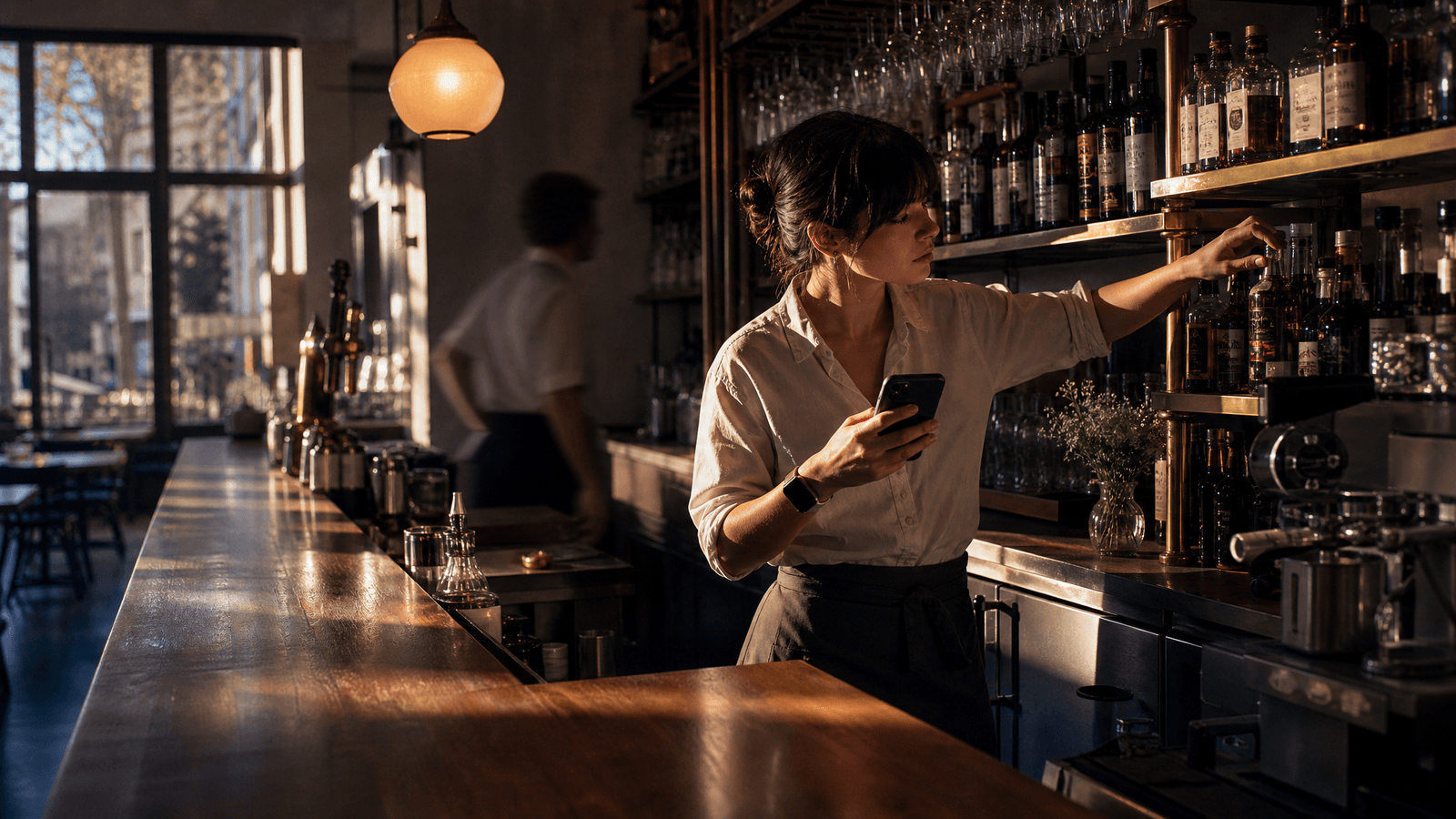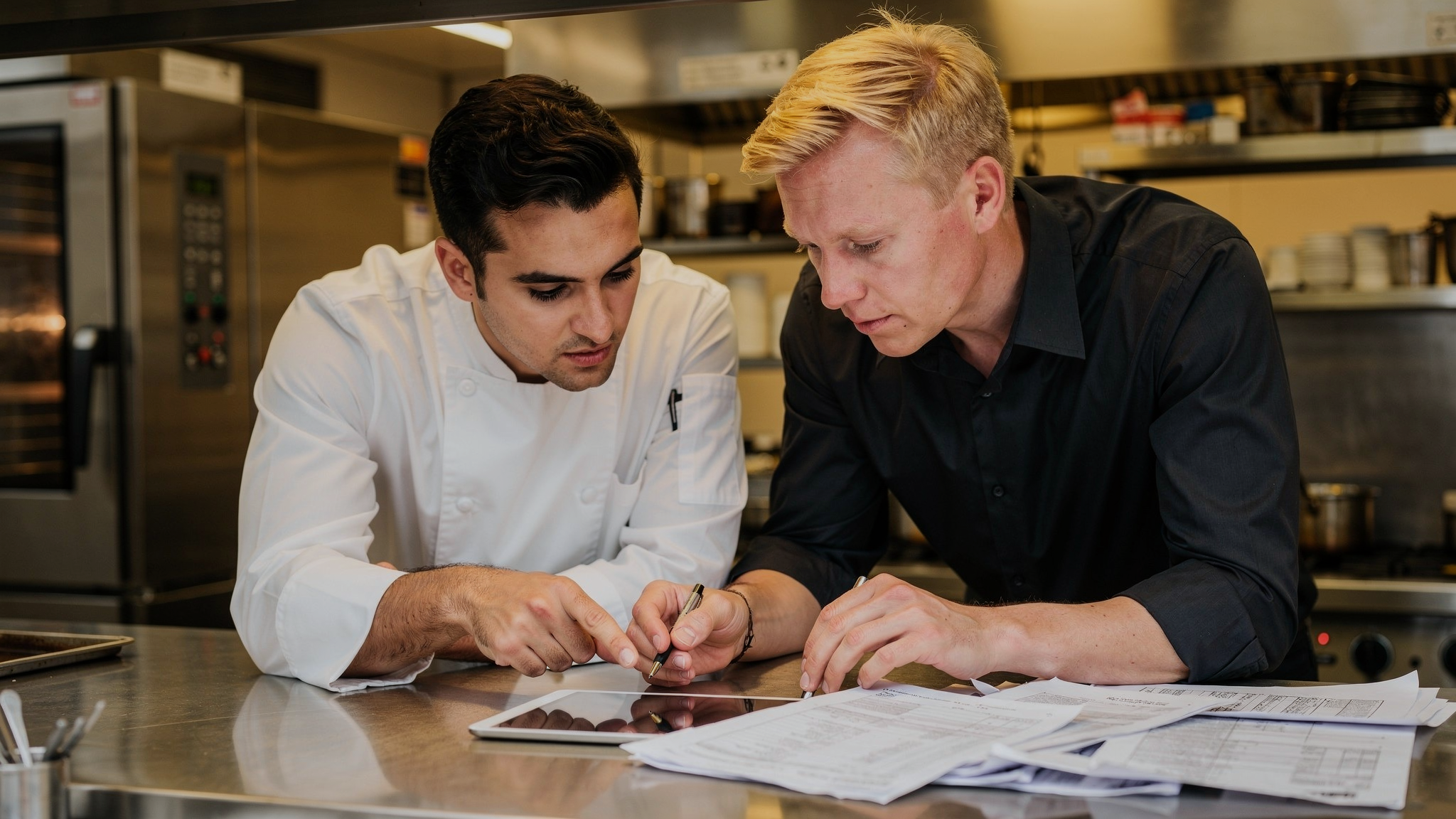
A restaurant with a bar attached will usually run its food cost to two decimal places and treat the drinks as something that looks after itself. The recipes get costed and the portions get argued about, and the kitchen gets a weekly figure. Meanwhile the bar produces a large share of the gross profit on a fraction of the scrutiny.
Part of that is history, because in a food-led business the kitchen is where the pressure is. Part of it is that drinks feel simple. Something comes out of a bottle at a known volume into a glass at a known price, and there is no yield or trim or prep to worry about. That simplicity is real, and it is exactly why the losses are so hard to see.
What Is Beverage Cost Control?
Beverage cost control is knowing what your drinks actually cost to serve, across the whole list, and closing the gap between that and what leaves the store. It covers spirits, wine, beer and everything mixed with them.
The headline figure is your beverage cost percentage, so what the drinks you sold cost you set against what you charged for them. Like any single number, it tells you whether something is wrong without telling you what.
Why Drinks Margin Gets Less Attention Than It Earns
Drinks typically carry a considerably better margin than food, so a point recovered behind the bar is worth more than a point recovered in the kitchen. The bar is also physically smaller and holds fewer lines, so it counts faster.
The reason it still gets overlooked is that drinks losses do not look like anything. A kitchen with a waste problem has a visibly full bin. A bar losing the same money has a slightly emptier bottle, which nobody sees, in a room where the stock is measured in fractions and served in the dark at speed.
The Leaks and Which One Costs Most
Five things move the number, and they behave very differently.
Over-pouring is the one everybody names. A free-poured measure runs long more often than short, because nobody under-pours to be careful. On a 700ml bottle a 25ml measure gives you twenty-eight serves. Pour 30ml instead and you get twenty-three, so five serves have gone, and at eight euros a drink that is forty euros off a single bottle.
Waste and breakage covers the drink made wrong, the bottle knocked off the rail, the wine ordered by the glass and left. Individually trivial, and on a busy weekend it accumulates faster than anyone would guess.
Comps and staff drinks are their own category, and the problem is rarely the policy. Most bars have one. The problem is whether the drink got rung through, because a comp recorded at zero price still tells your system the stock left, and a comp that never touched the till does not.
Wine by the glass loses money quietly at both ends. A bottle poured at 175ml gives four glasses with a little left, and the little left is either a generous fifth glass or something that oxidises by Thursday.
Supplier prices move behind the bar as they do everywhere else, and spirits and mixers are as prone to it as anything in the kitchen. The difference is that a bar list gets recosted far less often, so a rise can sit in there for a year.
Of the five, over-pouring is usually the largest on a spirit-led bar and the easiest to fix. On a wine-led restaurant the by-the-glass problem is generally bigger. Which is why the answer to where the money is going is different in different rooms, and worth actually checking instead of assuming.
Costing a Cocktail Properly
A cocktail is a recipe, and the same rules apply as in the kitchen. It has ingredients at unit costs, a specified quantity of each, and a total.
What gets left out is everything that is not the spirit. The base is easy to remember and the rest quietly is not, so the syrup, the juice, the vermouth topping up a bottle, the garnish and the ice all vanish from the costing. On a drink with four components, missing three of them because they are cheap will still put the cost out by a noticeable margin.
Prebatched mixes deserve the same treatment they get in a kitchen. If your bar batches a syrup or a pre-mix, cost the batch once and carry it as an ingredient, because otherwise every drink using it is priced on a guess. The approach is identical to costing a dish, and bars generally do less of it.
Wine and Beer Behave Differently
Wine sold by the bottle is the cleanest thing in the building. One unit in, one unit out, nothing to measure, and variance on bottle sales is close to a pure stock-control question.
By the glass is the opposite, and it is worth deciding explicitly how many glasses you expect from a bottle and holding the bar to it. The gap between four and five glasses from the same bottle is the entire margin on that line.
Draught beer has losses that are genuinely not anyone’s fault. Line cleaning, foaming and the first pull of a session all cost you volume, and a keg will not yield the theoretical number of pints. What matters is knowing roughly what your real yield is, so that the shortfall stops being a mystery and becomes a known cost you have allowed for.
Watching Drinks Alongside Food
The most common structural mistake is running the bar on its own, with a separate count, a separate spreadsheet and a separate conversation.
Keep the beverage percentage separate from the food percentage, because blending them hides both. Then look at them at the same time, on the same cycle, so that a month where food held and drinks slipped is visible as exactly that. A single combined figure will absorb a bar problem for months.
The counting is the part bars dread, and it is also what makes any of the above measurable. Counting the top twenty lines weekly and everything monthly gives you enough to see a leak while it is still small, and it is a shorter job than a kitchen count.
Variance Behind the Bar
Everything above needs the same thing: what your sales say you should have used, set against what actually left the shelf. Stockifi pulls sales from the POS and matches them against costed drink recipes, so each cocktail, wine and beer line carries a theoretical usage, and the count gives you the actual. The gap is variance, reported per product, which is what turns a vague sense that the bar is losing money into a list of the five lines it is happening on. Supplier prices update from the invoices at the same time, so the drinks list recosts itself. See how sales and usage tracking works.
Frequently Asked Questions
What is a good beverage cost percentage? It varies with what you sell, and a spirit-led bar will look very different from a wine-led restaurant. Track your own trend instead of a published figure, because a stable number moving two points is more useful than knowing where an average sits.
What is pour cost? Pour cost is the cost of the liquid in a drink set against its selling price, expressed as a percentage. It is a useful measure for spirits and a partial view of a whole drinks operation, since it says nothing about waste, comps or wine by the glass.
How do you stop over-pouring without upsetting the bar team? Measure rather than instruct. Jiggers and measured pourers help, and so does showing the team the variance on their own lines, because most over-pouring is habit and generosity instead of anything deliberate.
How often should a bar be counted? Weekly on the top twenty or so lines by value, and fully once a month. Bar counts are faster than kitchen counts, so a weekly high-value count is a genuinely small job for how much it catches.
Looking Behind the Bar
If you have never put the drinks list through the same discipline as the menu, that is almost certainly where the easiest margin in the building is sitting. Cost your ten best-selling drinks properly, including everything that is not the spirit, then count those lines weekly for a month and see what the gap says. On most bars it will name two or three lines, and those two or three will be worth more than a season of arguing about the kitchen.