




Ask three chefs what the same dish costs and you will often get three different numbers, all of them worked out honestly. Recipe costing looks like arithmetic, and mostly it is, but nearly every step has a judgement call tucked inside it. The places those three answers differ are the places the money hides.
The definition is the easy part. A dish cost is what leaves your store to put one plate in front of one guest. Plenty of kitchens work that out once, on the day the dish goes on the menu, and never touch it again. It is the never touching it again that does the damage.
What Is Recipe Costing?
Recipe costing means working out what one portion of a dish costs to produce, using the prices you actually paid for the ingredients that actually went into it. Done properly, you end up with a cost per portion you can hold against the menu price, and the gap between the two is your gross profit on that dish.
That is the whole reason to bother. Without a dish cost you can look at your food cost percentage at the end of a bad month, know something has gone wrong, and have no way of telling which dish did it.
From an Invoice Price to a Cost Per Portion
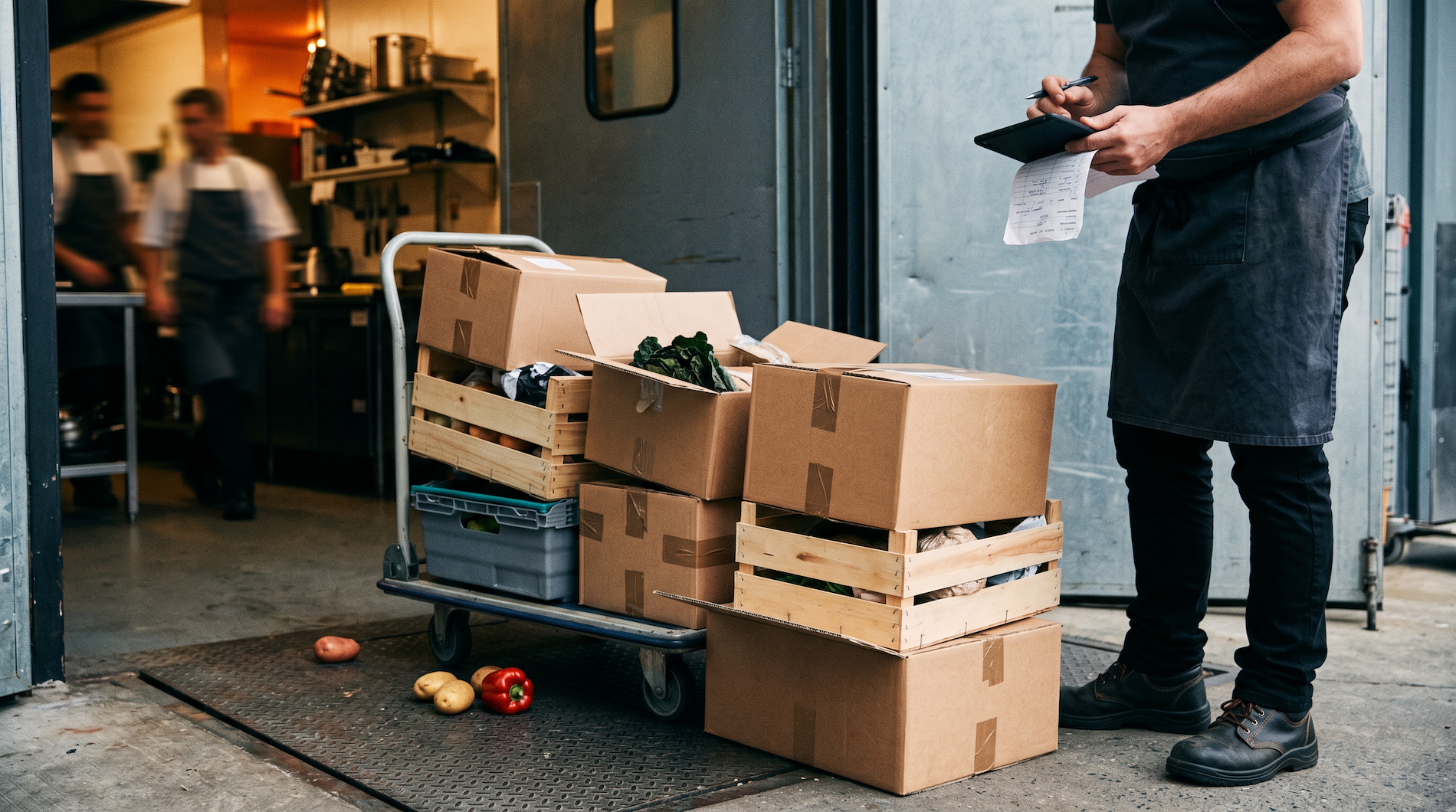
Every ingredient starts on an invoice, where you paid one price for one quantity. A five kilo block of butter at 38 euros works out at 7.60 a kilo. That is your unit cost, and it is the number every recipe built on butter leans against.
The recipe then tells you how much of it a portion uses. Sixty grams of that butter costs you about 46 cents, and you repeat the sum for everything else on the spec until you have a total. For most dishes that is twenty minutes of unglamorous work and it gives you a number you can defend.
Two things trip people up here, and both are about units. Recipes are written in the units a cook thinks in, so grams and spoons and each, while invoices arrive in the units a supplier sells in, so cases and litres and multipacks. Every conversion between the two is a chance to be out by a factor of ten, and a decimal in the wrong place on a high-value ingredient will quietly distort a whole section of the menu. The other trap is buying the same thing two ways. If half your olive oil comes in five litre tins and half in one litre bottles at a very different price per litre, the recipe needs to know which one the kitchen actually reaches for.
The Parts Everyone Leaves Out
Here is where the three chefs start disagreeing.
The biggest omission is yield. You buy a whole fish at a price per kilo, but the plate does not get the whole fish. By the time it is scaled and filleted and pin-boned, a good deal of what you paid for is in the bin or the stock pot, so the true cost of the flesh on the plate is considerably higher than the invoice suggests. An ingredient that yields around 65 percent means every gram reaching the guest carries roughly half as much cost again as the raw price implies. Cost the recipe on the raw price and the dish looks a lot healthier than it is. This applies to almost anything you break down yourself, and it is the single most common reason a costed menu quietly under-reports.
Then there is the work that happens before the dish is assembled. Stocks, sauces, doughs and pickles all get made in batch, and the batch has a cost of its own. Costing a prebatch once and then treating it as an ingredient with its own unit cost is far easier than trying to trace six components through every dish that uses them, and it also means one price change flows through everything downstream without you chasing it.
The small things get left out for a more understandable reason, which is that individually they are not worth the effort. Nobody writes down the oil for the pan or the pinch of seasoning, and on one plate that is genuinely noise. Across a service it stops being noise, and the usual fix is to add a modest percentage to cover the unrecorded, then check occasionally that the percentage still looks right.
Portion size deserves its own mention, because a recipe cost assumes a portion that the kitchen is actually serving. If the spec says 180 grams and the line is putting out 210 on a busy Saturday, your costing is describing a dish nobody eats. That is a portion control problem before it is a costing problem, but it lands on the same number.
Why a Costed Recipe Goes Stale
A dish cost is a photograph of one week’s prices. Suppliers move their prices constantly and rarely announce it, so the invoice arrives at the same total while the cost per kilo underneath has drifted up. Nobody rechecks a recipe unless something forces them to.
The result is a menu costed on numbers that were true in spring being used to make decisions in autumn. What makes this genuinely expensive is that the error is not random. Prices move up more often than down, so a stale costing almost always flatters the dish, which means the plates you believe are carrying the menu may be the ones quietly eroding it. Restaurants find this at year end, when the accounts say one thing and the recipe file says another.
The other way a costing ages is that the dish itself changes. A cook adjusts the garnish, or a supplier substitutes a similar product, or someone swaps the cheese for one that plates better. Each change is small and reasonable and nobody updates the spec, so after a season the recipe on file and the dish on the pass have quietly parted company.
Keeping the Cost Current Without Redoing the Work
The honest answer to how often you should recost is more often than you do now and less often than never. What makes it manageable is doing it by exception rather than in one enormous annual sweep.
Sort your ingredients by how much you spend on them, then accept that a small number of lines account for most of your food cost. Those are the ones worth watching closely, and a change in any of them is worth pushing through the recipes immediately. The long tail of cheap, stable items can be reviewed once or twice a year without anyone noticing.
Tie the review to something that already happens. When a supplier price moves and you already track those changes, the recost is a small follow-on task instead of a project you have to schedule. And whenever the kitchen genuinely changes a dish, update the spec that day, because reconstructing it three months later is guesswork.
Costing That Maintains Itself
This is the part Stockifi is built to take off your hands. Supplier invoices are read line by line as they come in, so unit costs update themselves from what you actually paid, and every recipe built on that ingredient recosts at the same time. Yields and prebatches sit inside the recipe rather than in someone’s head, so the cost per portion reflects what reaches the plate. Because sales come across from the POS as well, the dish cost stops being a static file and becomes something you can read against what you should have used each week. The setup is done for you, which matters here more than usual, since populating a recipe library is the job most restaurants dread. See how live recipe costing works.
Frequently Asked Questions
How do you calculate the cost of a recipe? Work out the unit cost of each ingredient from the invoice, so the price divided by the quantity, then multiply by the amount the recipe uses and add it all together. Adjust for yield on anything you break down yourself, and include prebatched components at their own cost.
What should food cost percentage be per dish? Most restaurants aim somewhere in the region of 28 to 35 percent per dish, though it varies a great deal by cuisine and by market. It is more useful to look at the cash margin across the menu than to hold every single dish to the same percentage.
How often should recipes be recosted? Continuously for your highest-spend ingredients, and at least twice a year for everything else. A recipe should also be recosted the moment the dish itself changes.
What is yield in recipe costing? The share of what you bought that actually reaches the plate after trimming, boning or peeling. A 65 percent yield means you are only plating 65 percent of the weight you paid for, so the real cost per gram is meaningfully higher than the invoice price.
Getting a Number You Can Trust
A costed recipe is only worth having if you believe it. That means the yields are in it and the prebatches are priced. It also means the portion it assumes is the one the line actually serves, at prices from this month instead of last spring. Start with the ten dishes you sell most of and the ten ingredients you spend most on, because the overlap between those two lists is where nearly all of your food cost lives. Get those honest and the rest of the menu will wait.