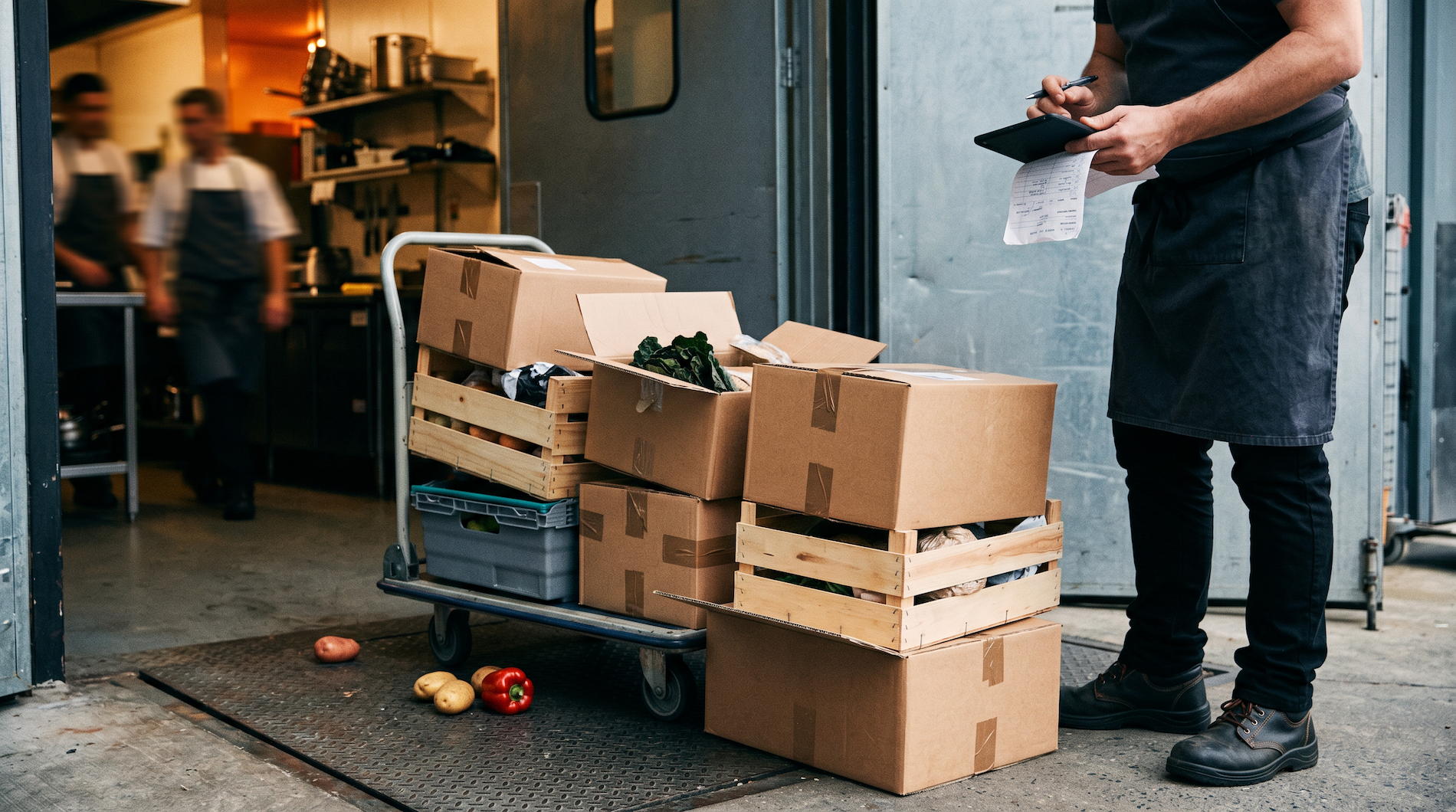
Almost all the attention in stock control goes to the counting. It is the part that takes people and hours, gets scheduled, and gets argued about afterwards in the office.
The pricing happens later, quietly, usually by whoever is doing the paperwork that month. It decides what your closing stock is worth, and that figure walks straight into your cost of goods and comes out the other side as the margin you report. Get the count right and the price casual, and you have produced a number nobody should be making decisions on.
What Is Stock Valuation?
Stock valuation is putting a monetary value on the physical stock you are holding at a point in time. You count what is there, attach a price to each line, and add it up.
The number matters because of where it goes next. Your cost of goods for a period is roughly your opening stock plus what you purchased minus your closing stock, so the closing figure sits directly in that calculation. Value the stock high and your cost of goods falls and your margin looks better. Value it low and the opposite happens, in the same month, on identical shelves.
The Count Is the Easy Half
A count is a physical fact, and if two people count carefully they will agree. Everything about how to run one, from how often to how to do it well, is a solved problem with known answers.
Pricing is where the judgement lives, and it goes wrong for an uncomfortable reason: there is no single correct answer. Several methods are legitimate, accountants accept all of them, and they produce different numbers on the same shelf.
Three Prices You Could Use
The most recent invoice price. Take what you last paid for the item and apply it to everything on the shelf. It is easy, it is defensible, and in a period of rising prices it values your stock at the top of the range, which flatters your closing figure and therefore your margin.
A weighted average. Blend the prices you actually paid across the period, weighted by how much you bought at each. It is the most representative of what the stock genuinely cost you and it takes the most work.
The oldest price still relevant, following FIFO. If you are using stock in the order you bought it, then what remains on the shelf is the most recently purchased, which points you back toward the latest invoice. Where FIFO changes things is in what it implies about the stock you consumed, which gets valued at the older, usually lower, prices.
Here is what the choice is worth. Say you hold 200 units of something you bought across three deliveries in the period, at 4.50, then 4.85, then 5.20. Value the lot at the latest price and it is 1,040 euros. Value it at a weighted average of roughly 4.85 and it is 970. That 70 euro gap on one line comes straight off your cost of goods, and across a store room it compounds into something that moves your reported food cost by a visible amount.
Where the Same Shelf Produces Different Numbers
Beyond the method, three things push the same stock to different values.
Part-used containers are the classic. A half-full tub gets counted as half, or as one, or as 0.6 depending on who is holding it, and on expensive items that estimate is worth real money. This is why weighing beats eyeballing on anything costly.
Products bought in more than one pack size cause the next problem. If the same oil arrives in five litre tins and one litre bottles at different prices per litre, the shelf holds two different unit costs and somebody has to decide which applies.
Then there is stock that has no clean invoice price at all, which is anything you made yourself. A tub of stock or a batch of sauce has a cost built from its components, and if that prebatch cost is not maintained, everything made from it is valued on a guess.
What Your Choice Does to the Margin You Report
What matters here is consistency. Switching between methods, or applying them inconsistently across lines, produces movement in your margin that has nothing to do with the restaurant.
A month where somebody used latest prices after three months of averages will show an improvement nobody earned. The following month it corrects and looks like a decline. Two entirely fictional swings, both of which someone will now try to explain, and neither of which happened in the kitchen.
That is the real cost of being casual about this. The damage lands in the noise it introduces into every comparison you make afterwards, including your weekly numbers and your year-on-year.
Why Doing This at Month-End Makes It Worse
Most restaurants value their stock in the same rushed window in which they close the month, which is precisely when the information needed to do it well is least available.
Prices get looked up from whatever invoice happens to be nearest the top of the pile, usually the latest one, because it’s what’s on the desk when someone needs a number. There is no time to weigh part-used containers, so those get estimated instead. And prebatch costs simply carry forward from whenever they were last worked out. None of that is anyone’s fault, and all of it is a consequence of doing the pricing after the period has already closed.
Almost none of this work has to happen at month-end. Unit costs can be maintained as invoices arrive, prebatch costs can be updated when a recipe changes, and pack size decisions can be made once instead of monthly. Do that and the close becomes applying prices you already have to a count you already trust, which is an hour instead of a day, and the number is better as well as faster.
Picking One and Staying With It
For most independent restaurants, a weighted average is the right default, because it reflects what you genuinely paid and it is stable across months. If you are working from spreadsheets and the averaging is too much work, using latest invoice prices consistently is a perfectly reasonable second choice.
Whichever you pick, write down which one it is, apply it to every line, and tell whoever does your accounts. Consistency is worth more here than precision, since a slightly imperfect method applied the same way every month gives you comparable numbers, and a perfect method applied differently in March and April gives you nothing you can read.
Where Stockifi Fits
This is a problem that largely disappears when the prices maintain themselves. Stockifi reads supplier invoices line by line as they arrive, so every ingredient carries a current cost and a purchase history without anyone typing prices in, and the valuation method is applied consistently across every line instead of by whoever is doing the paperwork that month. Counts are done on a phone and priced automatically, prebatches carry their own maintained cost, and the closing figure lands the same way every period. The result is a stock value you can compare month to month, which is the whole point of producing it. See how inventory management works.
Frequently Asked Questions
How do you value restaurant inventory? Count the physical stock, apply a consistent price to each line, and total it. The usual choices are the most recent invoice price or a weighted average of what you paid across the period, and both are accepted as long as you apply the same one every time.
What is the difference between FIFO and weighted average? FIFO assumes you use stock in the order you bought it, so what remains is valued at recent prices and what you consumed is valued at older ones. Weighted average blends all purchase prices in the period, so both your stock and your usage sit at the same blended figure.
Why does stock valuation affect food cost percentage? Because closing stock sits inside the cost of goods calculation. A higher closing value reduces your cost of goods for that period and improves the reported margin, and the difference reverses the following month.
Do I need to value stock every month? If you want a monthly cost of goods figure, yes, since the calculation needs an opening and a closing number. Restaurants that count weekly on high-value lines usually value fully at month-end and use the weekly counts for variance instead.
Getting a Number You Can Compare
The value of a stock figure lies in comparing it to the last one, so the method matters less than the discipline. Decide which price you are using, apply it to everything, and move as much of the work as you can out of month-end and into the weeks before it. Do that and your closing stock stops being a number produced under pressure on the last afternoon of the month, which is the version most restaurants are quietly making decisions on.