Most cafe and restaurant owners know what a bag of beans costs them and what they charge for a latte. The coffee cost per cup for each drink on the menu comes from those two figures, with the milk and the takeaway cup added in.
This article works two common drinks through to a cost per cup with example prices and shows where the machine loses money along the way. Swap in your own bean price and dose as you go.
What Goes Into the Coffee Cost Per Cup
Every coffee starts with a dose of ground coffee, and most drinks add milk. A takeaway also needs a cup and a lid. On top of that, the machine loses a little coffee and milk every day, and that loss belongs in the cost as well.

All four belong in the cost of one drink.
Each part is easy to price on its own, and the sections below add them up drink by drink.
Working Out the Espresso Cost Per Shot
Start with the price you pay per kilo of beans and the dose your baristas use. A double shot commonly takes about 18 grams of ground coffee, which means a kilo makes around 55 double shots on paper, a few fewer once you allow for purging the grinder.
Say your beans cost 25 euros a kilo. At 18 grams, each double shot costs 45 cents in coffee. If your house dose is 20 grams, the same kilo makes 50 shots and each one costs 50 cents.
What Milk and Takeaway Cups Add
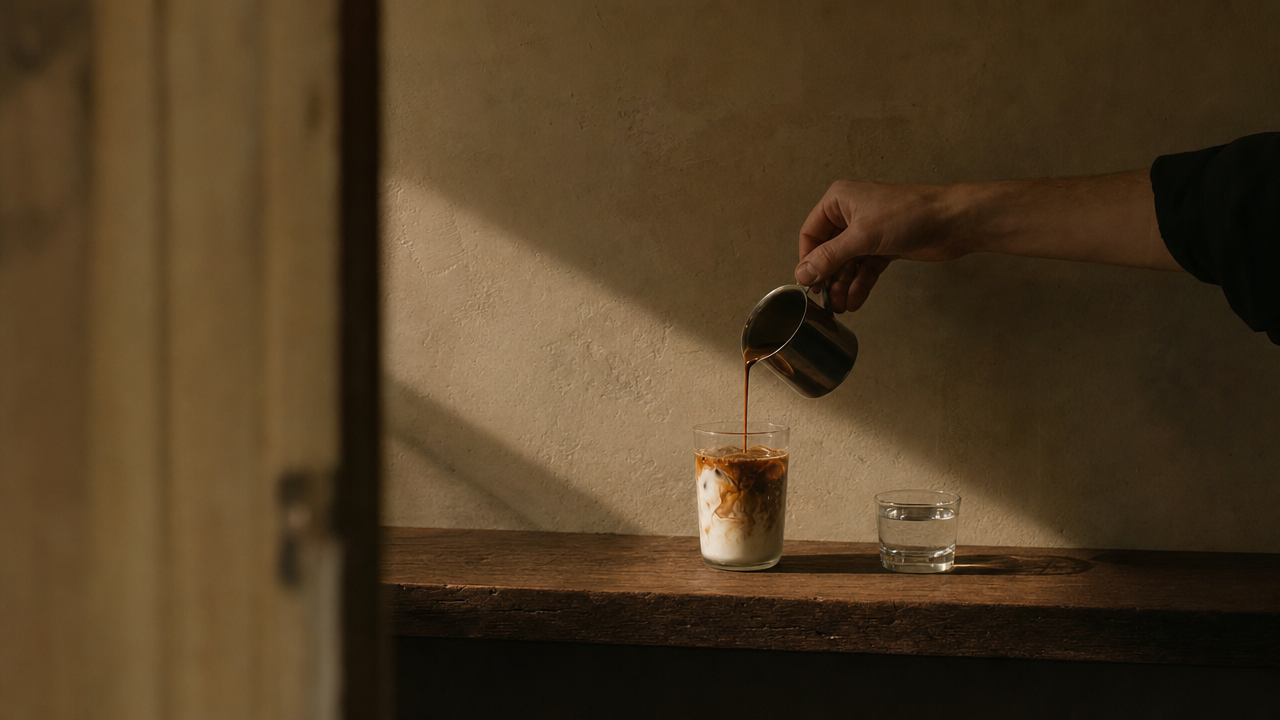
Milk is the next cost. A latte takes about 200 millilitres of milk once you count what you pour away from the jug. At 1.40 euros a litre, that is 28 cents, and the latte costs 73 cents before it leaves the bar.
Oat milk at 2.60 euros a litre puts the same 200 millilitres at 52 cents, and the oat latte comes to 97 cents.
A takeaway cup and lid add their own cost, say 15 cents together. The takeaway latte then costs 88 cents to make, against 73 cents for the same drink in a cup that gets washed.
Where the Waste Happens at the Machine
One source of waste is dialling in. Each morning, and whenever the beans or the weather change, the barista pulls shots to set the grind and pours them away. If that comes to four double shots a day, it is 72 grams of coffee, which over 360 trading days is about 26 kilos, or around 650 euros at 25 euros a kilo.
Dose drift is the larger figure in this example. A grinder set to 18 grams can slowly creep to 19 and add a gram to each shot. At 200 coffees a day that is 200 grams, or five euros a day at 25 euros a kilo, and about 1,800 euros over a year of trading. Weighing a shot at the start of each shift catches the drift, the same way portion control works in the kitchen.
Milk has its own version. A jug that is too large for the drink leaves more behind every time. Note what you pour away in the waste log for a week or two to see what it adds up to.
Pricing the Coffee Menu
With the cost per drink worked out, the coffee pricing in a cafe becomes a simple sum. An espresso sells for 3.00 euros before VAT and costs 45 cents, which is a 15 percent cost. A latte at 4.00 euros before VAT costs 73 cents, or about 18 percent, and the takeaway version at the same price runs at 22 percent.
The espresso leaves 2.55 euros and the latte 3.27, and that cash pays for the barista’s time and the machine. Our article on menu pricing covers why the cash per item matters as much as the percentage.
Plant milk is one place where a separate price makes sense. The oat latte costs 24 cents more than the dairy one, and a surcharge of that size or a little more keeps both drinks at the same margin in euros. The takeaway cup is the other candidate, as a fixed cost that comes with every takeaway order.
Seeing Coffee in the Stock Count
In Stockifi, once you link each drink’s POS button to a recipe with its dose and its milk, every coffee sold adds to the theoretical usage of beans and milk. A stock count then shows how much coffee actually went. If the cafe used 30 kilos of beans in a month and its sales account for 26, you look into the four-kilo gap, and dose drift and poured-away shots are two of the usual causes. Logging the dial-in shots as waste in the app takes them out of the unexplained gap. See how variance analysis works.
Frequently Asked Questions
How much does a cup of coffee cost to make? With beans at 25 euros a kilo and an 18-gram double shot, the coffee in an espresso costs about 45 cents. A latte with 200 millilitres of milk at 1.40 euros a litre comes to about 73 cents. Your own figure depends on your bean price and your dose.
How many shots are in a kilo of coffee? About 55 double shots at 18 grams each, or 50 at 20 grams, before purging and dialling in.
Should oat milk cost extra? The oat latte in the example costs 24 cents more to make than the dairy one. A surcharge of at least that keeps the two drinks at the same margin in euros.
How do you reduce coffee waste? Weigh a shot at the start of each shift to catch dose drift, and use a milk jug sized to the drink. Logging the shots poured away while dialling in shows what they cost.
Checking Your Own Coffee Cost Per Cup
The quickest place to start is your best-selling drink. Weigh one shot as it comes off the grinder, and use that dose with your bean price and the milk to work out the coffee cost per cup for that drink.