A delivery app puts your menu in front of guests who might never sit down in your dining room, and it takes a commission on every order they place. Is delivery profitable for restaurants?
The sections below work out what one order leaves after the platform’s share and the food, then ask whether those orders fill quiet hours in the kitchen or compete with the dining room at its busiest.
What a Delivery Order Costs a Restaurant
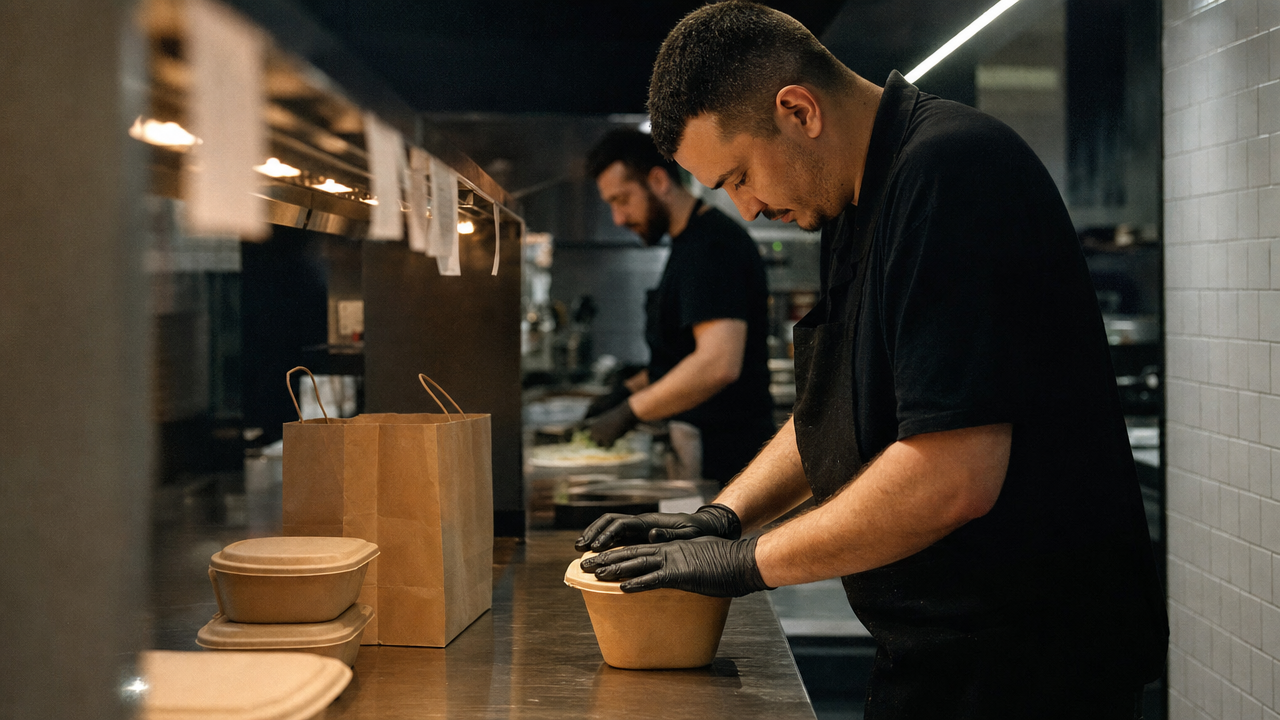
A dish sold through an app costs the same to make as one sold at a table. On top of that, the platform takes a commission on each order, and the dish leaves the kitchen in packaging the restaurant pays for.
Some costs drop away as well. A delivery order never takes a table or needs a server, and that saving in front-of-house time offsets part of the commission. The kitchen side stays as it was, which is why you have to do the sum dish by dish.
Commission and Packaging on Top of Food Cost
Commission is the big line. In Finland, one delivery platform charges restaurants a sales commission of 20 to 30 percent on orders placed through it, according to the broadcaster Yle, May 2025, reporting on the Finnish competition authority’s investigation. Other platforms work on commission too, and the exact rate on any of them depends on your contract and your market.
Packaging is a smaller cost, and it lands on every order. If the container and bag for a main come to 0.80 euros, 400 orders a month add 320 euros that the dining room never pays. If your accounts book packaging as supplies, it never reaches the dish’s food cost, so add it to the delivery sum yourself.
Working Out the Margin on One Delivery Order
Take a burger with fries at 18 euros before VAT, with a food cost of 5.40, which is 30 percent. In the dining room it leaves 12.60 after food. On the app, a 30 percent commission and the packaging take another 6.20 off, and the same burger now leaves 6.40. That is about half of what it leaves at a table, and at a 20 percent commission it would leave 8.20.

On the app, commission and packaging take about half of what the burger leaves at a table.
Whether 6.40 is good business depends on what the order displaced. On a Tuesday afternoon, with the kitchen half idle, it is money the restaurant would not otherwise have earned, from cooks the restaurant was paying anyway. On a Friday at eight, every delivery ticket on the rail takes kitchen time from a table, and an order that leaves 6.40 is holding up a dish that would have left 12.60.
These figures are before VAT, and in some markets the VAT rate on takeaway food is lower. Norway taxes takeaway food at 15 percent and food served in the restaurant at 25 percent, according to Skatteetaten, October 2026. Sweden has cut the rate on takeaway food to 6 percent from 1 April 2026 until the end of 2027, while restaurant service stays at 12 percent, according to Skatteverket, February 2026. At the same menu price, the restaurant keeps more of a takeaway order in both countries. Check too whether your platform charges its commission on the price with VAT or without it, because that moves the line by a few percent.
Which Dishes Earn Their Place on the Apps
Commission takes a share of the price, while the food cost of a dish stays what it is. That changes which dishes pay their way.
Take a seafood main at 24 euros with a 38 percent food cost, and a curry at 19 euros with a 24 percent food cost. In the dining room the seafood leaves 14.88 after food and the curry 14.44, which puts the seafood slightly ahead. On the app, after a 30 percent commission and 0.80 of packaging each, the seafood leaves 6.88 and the curry 7.94. The cheaper dish has become the better one to sell.
Rank the delivery menu on what each dish leaves per order, and look hardest at the dishes with a high food cost, since those keep the least once the platform’s share comes off. A dish also has to arrive in a state you would serve, and steam in a closed box softens anything crisp. The menu pricing article covers the contribution logic behind a ranking like this, and menu engineering sorts dishes by what they contribute and how often they sell.
When a Separate Delivery Price Makes Sense
Many restaurants run one menu at one price across the dining room and the apps, which keeps things simple for the kitchen and for guests who use both. The commission then comes straight out of the margin.
A higher delivery price is the most direct way to recover some of it. On the burger above, a delivery price 10 percent higher, at 19.80, takes what each order leaves from 6.40 to 7.66.
Whether you can do that depends on your agreement with the platform. One platform’s contracts used to bar restaurants from charging more on the app than at their own outlets. That platform dropped the term in Finland, which the Finnish competition authority, May 2025 confirmed, and in Denmark in December 2025, according to the Danish competition authority, August 2026, so restaurants there set their own delivery prices. In other markets, check your agreement before you change prices. A separate price makes most sense for the dishes at the bottom of your delivery ranking, where a small difference decides whether the dish stays on the app at all.
Seeing Delivery in the Same Food Cost
Wolt and Foodora both connect to Stockifi the way a POS system does. Their sales come in line by line with selling prices and discounts, and once each sale maps to its recipe, delivery orders count toward theoretical usage alongside the dining room. The variance after each stock count covers both. Recipe costs update from supplier invoices as they reach your accounting system, which keeps the food cost behind each delivery dish current when you run the sums above. See how the Wolt integration works.
Frequently Asked Questions
Is delivery profitable for restaurants? It can be. Work out what each order leaves after the platform’s commission and the cost of the dish, then check whether delivery orders fill quiet kitchen hours or compete with the dining room at its busiest. Orders that use spare capacity add profit. At peak, they can take kitchen time from tables that would have earned more.
How much commission do delivery apps charge restaurants? In Finland, one platform’s sales commission is 20 to 30 percent, according to Yle, May 2025. Other platforms work on commission too. Your own agreement sets the rate you pay, so check it there.
How do you calculate the margin on a delivery order? Start from the price before VAT and take off the commission and the packaging. Take the food cost off what is left, and the rest is the order’s margin, which has to pay for the kitchen’s time and everything else the restaurant runs on.
Should delivery prices be higher than dine-in prices? Where your agreement allows it, a slightly higher delivery price recovers part of the commission. Start with the dishes that leave the least per order on the app.
Running the Delivery Sum on Your Own Menu
Work out what your ten best-selling delivery dishes leave per order, then look at the hours those orders arrive. Is delivery profitable for your restaurant? Between them, those two show which dishes and which hours to change first.