






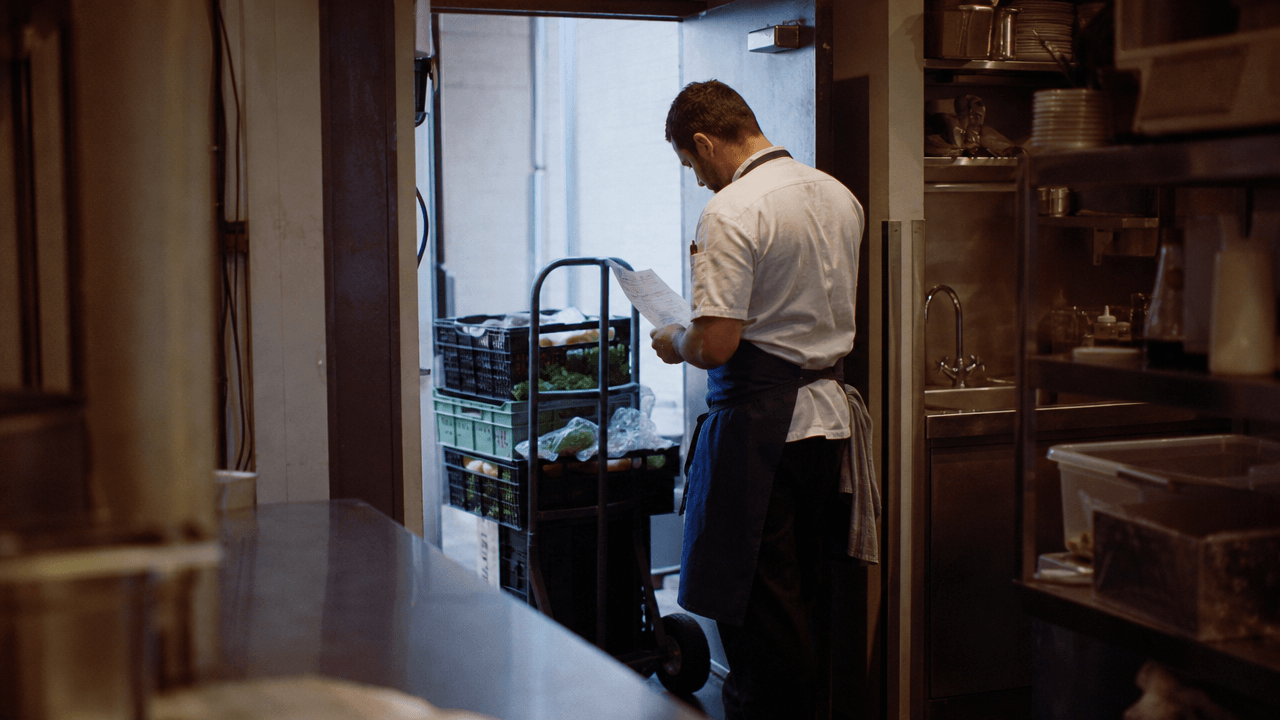
The back door is the least glamorous place in a restaurant and the one where your food cost gets decided. A delivery arrives mid-prep, and because the driver is double parked somebody signs for it without looking and the boxes go straight into the walk-in. Whatever was actually in them is now a matter of faith.
Everything downstream depends on that moment. Your recipe costs and your variance both assume the delivery matched the docket, and so does the invoice you will pay in thirty days. When it did not, the error travels quietly through the whole system and comes out the other end as a number nobody can explain.
What Actually Goes Wrong at Delivery
Most receiving problems are not dramatic and none of them look like errors at the time.
The most common is simple shortage. You ordered ten kilos of chicken thigh and eight arrived, the docket says ten, and unless somebody weighs it the two kilos are gone. Nobody stole anything; a case got miscounted at the depot. It happens constantly and it is entirely invisible unless you check.
Then there are substitutions. Your supplier is out of the cut you ordered and sends the nearest thing, which is usually more expensive and occasionally quite different to cook with. Sometimes it is flagged, sometimes it arrives as a line on the docket that reads close enough to the original that nobody notices until the chef opens the box.
Quality rejections are the ones people do catch, because wilted or short-dated stock announces itself. What gets missed is the paperwork afterwards. The box goes back, but the credit does not always follow it, so the invoice turns up for the full amount anyway.
The last one is the quietest and the most expensive over a year. Pack sizes drift. A case that held six of something now holds five, or the unit price stayed the same while the weight came down. The invoice total looks familiar and the line reads exactly as it always did, so your cost per portion has moved without a single conversation about price. That is a close cousin of the way supplier price changes slip past you in the first place.
Where Short Weights and Pack-Size Shifts Hide
The reason these survive is that a restaurant’s checking effort naturally lands on the wrong end of the process.
Almost everyone reconciles at month end, matching invoices against what they think they received. By then the food has been cooked and sold. The person who took the delivery is on a different shift, and the only evidence is a docket somebody scribbled on. Whatever the invoice says is effectively what happened, because nothing can contradict it.
Weight is the classic hiding place. Meat and fish are usually priced per kilo and delivered in boxes with a stated weight, and the gap between what the box says and what it holds is exactly where a couple of hundred euros a month lives. A box that should be five kilos and comes in at four point six is four hundred grams short. Nobody would notice it by eye, and across a month of deliveries it becomes real money.
Pack size hides in a different way, because it does not change the shape of the invoice at all. The line item and the price both look untouched. The only thing that moved was the quantity inside. It surfaces later as a recipe that costs more than it should, which is usually blamed on portioning long before anyone questions the box.
The Check That Fits Between Deliveries
A receiving check that takes fifteen minutes will not survive a busy Thursday. One that takes two will.
Start with the docket in your hand before anything comes off the van, not after. This is the single change that does most of the work, because a discrepancy you raise with the driver present is resolved on the spot, and one you find an hour later becomes a phone call nobody makes.
Then count the cases against the docket, the boxes themselves and not what is inside them. It takes seconds and it catches the outright shortages, which is where most of the money goes missing.
Anything priced by weight gets weighed, which in practice means proteins, fish, and whatever else you buy by the kilo. You do not need to weigh every box. Take one from each line, compare it to what the docket claims, and if that one is short the rest of the line probably is too.
Fresh goods need a look at dates and condition, and anything you are going to send back should go back while the van is still there. A rejection while the driver is there is a line crossed off the docket. The same rejection at four in the afternoon is a credit note you will chase for a fortnight.
Then sign, and note anything you changed directly on the docket. That annotation is the only evidence you will have in three weeks when the invoice arrives saying something different.
The whole thing runs on high-value lines only. Nobody is weighing a box of napkins, and a check that tries to cover everything is a check that gets skipped.
What to Do When the Delivery Does Not Match the Docket
Getting the discrepancy noticed is most of the battle. Getting it corrected is a paperwork habit.
Mark the docket at the door, both copies, and have the driver initial it. This turns an argument into a record. Most suppliers are entirely reasonable about a properly documented shortage and quite hard to pin down on an undocumented one.
Then close the loop, because this is where restaurants lose money they have already correctly identified. A shortage noted at the door only becomes money if it reaches the invoice as a credit. Somebody has to check that it did, which means the annotated docket has to reach whoever handles invoices instead of living in a drawer by the back door.
If the same line shorts repeatedly, that is worth raising with the supplier, not just claiming another credit. A pattern across weeks tells you something a single incident does not, and it is a much stronger position to negotiate from than a vague sense that a supplier is unreliable.
How Receiving Accuracy Shows Up in Your Food Cost Weeks Later
The delay is what makes this hard to take seriously in the moment.
An uncaught short delivery does two things at once. It leaves your cost per kilo too low, because the price you are working from assumes you received everything you were billed for, so every recipe built on that ingredient looks cheaper on paper than it was in the pan. It also puts stock into your system that was never physically there, so when you count at the end of the month the shelves come up short and the difference lands in variance.
That is the frustrating part. The loss does not arrive labelled as a receiving problem. It arrives as an unexplained gap, sitting alongside portioning and waste and everything else, and it gets attributed to whichever of those the team happens to suspect. Invoice errors and receiving errors look identical by the time they reach your food cost, which is why the check at the door is worth more than any amount of forensics later.
Kitchens that get the receiving process right tend to find their variance becomes easier to read, because one of the noisier sources of it stopped contributing.
Frequently Asked Questions
What is the restaurant receiving process? The check you run when a delivery arrives, comparing what physically came off the van against what the delivery docket claims, before you sign for it. It covers case counts, weights on anything priced per kilo, and condition on fresh goods.
How long should a receiving check take? Two to three minutes for a normal delivery if you check case counts and weigh one box per high-value line. A check designed to cover every item takes too long and stops happening.
Who should take deliveries? Whoever can be there with the docket when the van arrives, which usually means a chef or a shift manager, not whoever happens to be nearest the door. The person needs the authority to reject something and the habit of annotating the docket.
Do I still need to check if my invoices are processed automatically? Yes. Line-level invoice processing tells you accurately what you were charged for and flags when a price or pack size moves, which catches the paperwork side. What arrived on the van is a physical fact, and the back door is the only place to establish it.
Getting the Back Door Right
The receiving check will never be the interesting part of anyone’s day, and it is the cheapest food cost work you can do. Give it two minutes with the docket in your hand, count the cases, weigh one box on each high-value line, and mark anything wrong before the driver leaves. Then make sure that annotation reaches whoever pays the invoice.
Stockifi reads every supplier invoice line by line, so a price move or a pack-size change surfaces as soon as the invoice lands instead of at the end of the quarter, and recipe costs update with it. See how invoice automation works.