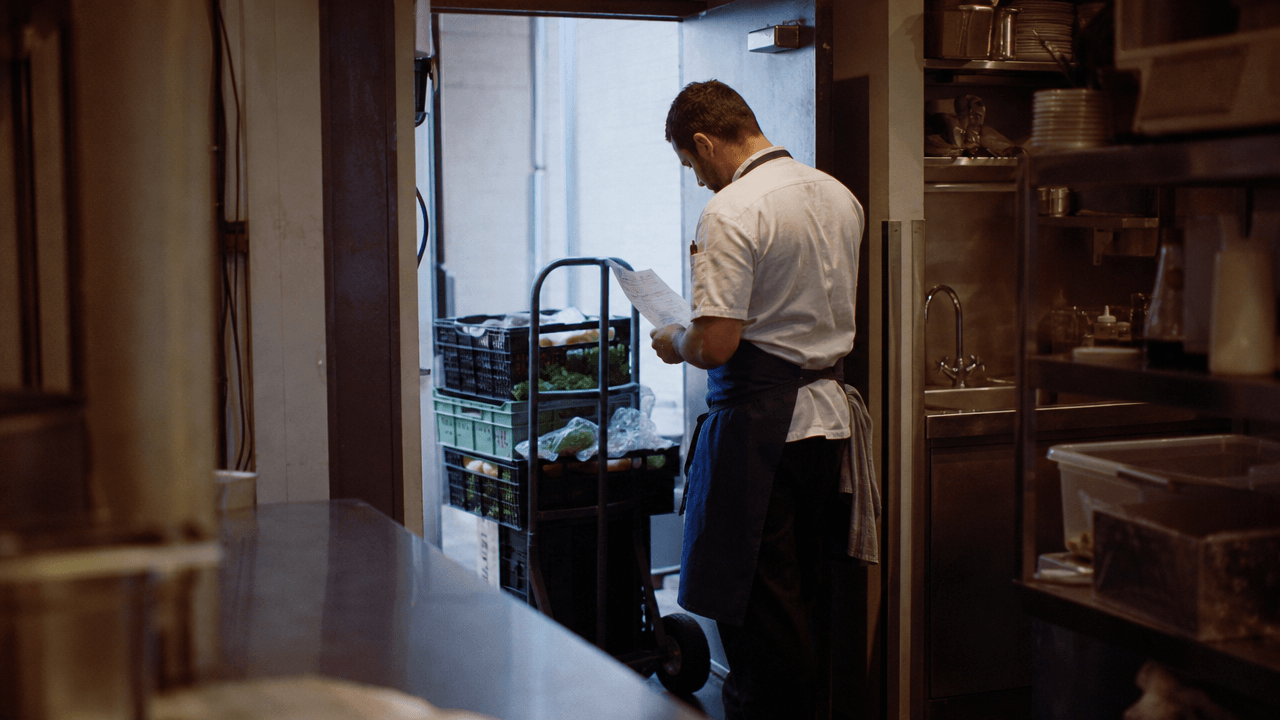





Most of what spoils in a walk-in was bought correctly and put away badly. The damage happens in the two minutes after a delivery lands, when a crate goes onto the front of a shelf and pushes everything already there into the dark at the back.
Rotation is the least interesting subject in this whole business and one of the cheapest things to fix. It needs no software, no supplier conversation and no meeting. What it needs is for the habit to survive a Friday, which is where most attempts fall over.
What Is Stock Rotation?
Stock rotation means using what you bought first before you use what you bought second, so that nothing sits long enough to go out of date. The usual shorthand is FIFO, first in and first out, and every kitchen knows the phrase.
Knowing it and running it are different things. A kitchen with a written FIFO policy and no visible dates on the tubs is running a rotation system in name, because the cook reaching into the walk-in at seven on a Saturday has no way of telling which of the two identical containers came in on Tuesday.
Why Good Stock Still Goes Off
Three things conspire, and none of them is carelessness.
The first is physics. Shelves are loaded from the front because that is where your hands are, and taken from the front for exactly the same reason. Left alone, a shelf will always serve you the newest item and quietly age the oldest one at the back. Every rotation system in existence is an attempt to fight that one tendency.
The second is speed. Deliveries arrive during prep, when the kitchen has other things happening, and putting stock away properly takes longer than putting it away quickly. Pulling the older tubs forward, wiping down, relabelling and then loading behind is maybe ninety seconds a shelf. On a calm Tuesday nobody minds. On a Friday with a delivery late and service in two hours, it is the first thing to go.
The third is that the cost never shows up where the mistake happened. Nobody is standing there when a tub goes over, and the loss surfaces days later as something binned in a hurry, which means the connection back to how it was put away is never made. The number lands in your food cost as unexplained variance and gets filed under waste, which is true and useless.
Worth putting a figure on it. Binning eighty euros of produce a week, which is a couple of crates and would not raise an eyebrow in most kitchens, is a bit over four thousand euros a year on its own.
What FIFO Looks Like on an Actual Shelf
The principle is easy enough, and making it survive contact with a service takes a few deliberate decisions.
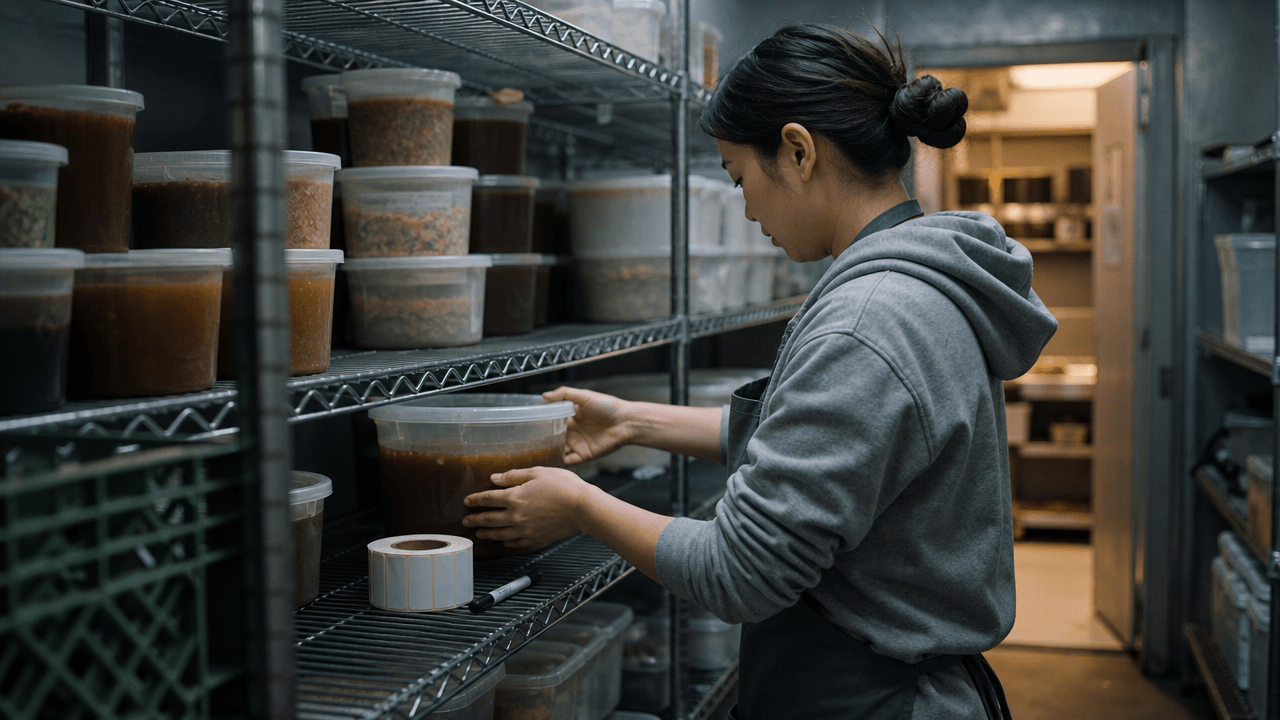
Load from behind. New stock goes in at the back and older stock gets pulled forward, and that is the whole system in four words, plus the part that gets skipped when the delivery is late. If a shelf is too deep or too tight to load from behind, rotation will fail there permanently, so it is worth moving the shelf instead of fighting it every week.
Give each product one home and keep it there. Half the rotation failures in a kitchen are really findability failures, where the second case of an item ends up somewhere else because its usual spot was full, and by the time anyone finds it the date has gone. A shelf where everyone knows what lives where takes seconds to check.
Break down cases on arrival where you sensibly can. A sealed case tells you nothing about what is inside it, and it invites the kitchen to open the new one because it is the one they can reach.
Labelling That Survives a Wet Hand and a Busy Friday
A label needs to answer one question from two metres away in bad light, which is whether this is the one to use next.
Write the date the item needs using by, in large digits, on the top and the front of the container. Most kitchens write the date it arrived, which is technically more informative and asks the cook to do a subtraction while holding a tub. The use-by is the number they actually need.
Keep the system to one kind of label and one pen. Kitchens accumulate three overlapping schemes, so day-dot stickers on some things and marker on tape on others and the supplier’s own printed date on the rest, and a cook reading three languages at speed will default to whichever is on top. Pick one and put the roll where the stock gets put away.
Accept that labels come off. Anything wet, frozen or handled constantly will lose its sticker, so the placement matters more than the adhesive and why the container shape and position should carry some of the information too.
The Deliveries Where Rotation Goes Wrong
Rotation is most fragile at the moment stock enters the building, which makes the receiving process the right place to defend it.
Substitutions are the classic trap. A supplier sends a similar product in a different pack, so it does not match what is already on the shelf, and because it looks unfamiliar it either gets used immediately or ignored entirely. Both are rotation failures.
Bulk buying causes the other half. An offer on a case price is only a saving if you get through it before it turns, and the quantity that makes the discount worthwhile is often more than your shelf life allows. That decision gets made on a price list and paid for in the bin three weeks later.
Checking Rotation Without a Full Count
You do not need a stock count to know whether rotation is working. Walk the walk-in and look at the back of two or three shelves, because the back is where failure accumulates. If the oldest dates in the building are at the back and there are not many of them, the system is holding.
The other check is the bin. Keep even a rough note of what gets thrown and why for a fortnight, and the pattern will name itself, because spoilage clusters around a handful of products instead of spreading evenly. Those products either need a smaller order, a different storage spot, or a place on the specials board while they still have life in them.
Where Stockifi Fits
Rotation itself is a shelving habit and no system will do it for you. What software changes is whether you can see the cost of getting it wrong. When counts are done on a phone and matched against what your recipes and sales say should have been used, the gap between the two stops being a mystery and starts pointing at particular products. A line that shows a consistent loss month after month is usually a rotation or storage problem rather than a portioning one, and knowing which is which is what makes the ninety seconds a shelf worth arguing for. See how variance analysis works.
Frequently Asked Questions
What does FIFO mean in a restaurant? First in, first out. The stock that arrived earliest gets used earliest, which in practice means loading new deliveries behind what is already on the shelf and pulling the older items forward to the front.
Should I label with the delivery date or the use-by date? Use-by, written large on the top and the front. A delivery date is more informative on paper and it asks the person holding the tub to work out the shelf life themselves, which is exactly what will not happen mid-service.
How often should stock rotation be checked? A quick look at the back of a few shelves during any normal walk-in visit will catch most problems. Beyond that, the waste you are throwing away is the real report, so noting what goes in the bin for a couple of weeks will tell you where rotation is failing.
Does stock rotation actually affect food cost? Yes, and it usually arrives disguised. Spoiled stock was bought, counted as a purchase, and never sold, so it lands in your food cost with nothing to show for it and gets absorbed into general waste.
The Cheapest Fix on the List
Nothing in this article costs money. Loading from behind, one home per product, one labelling system, and a look at the back of the shelf are all free, and together they remove a loss that most kitchens have quietly accepted as the cost of doing business. Start by opening your walk-in and looking at what is at the back of the second shelf down. Whatever you find there is what your rotation system is actually doing.