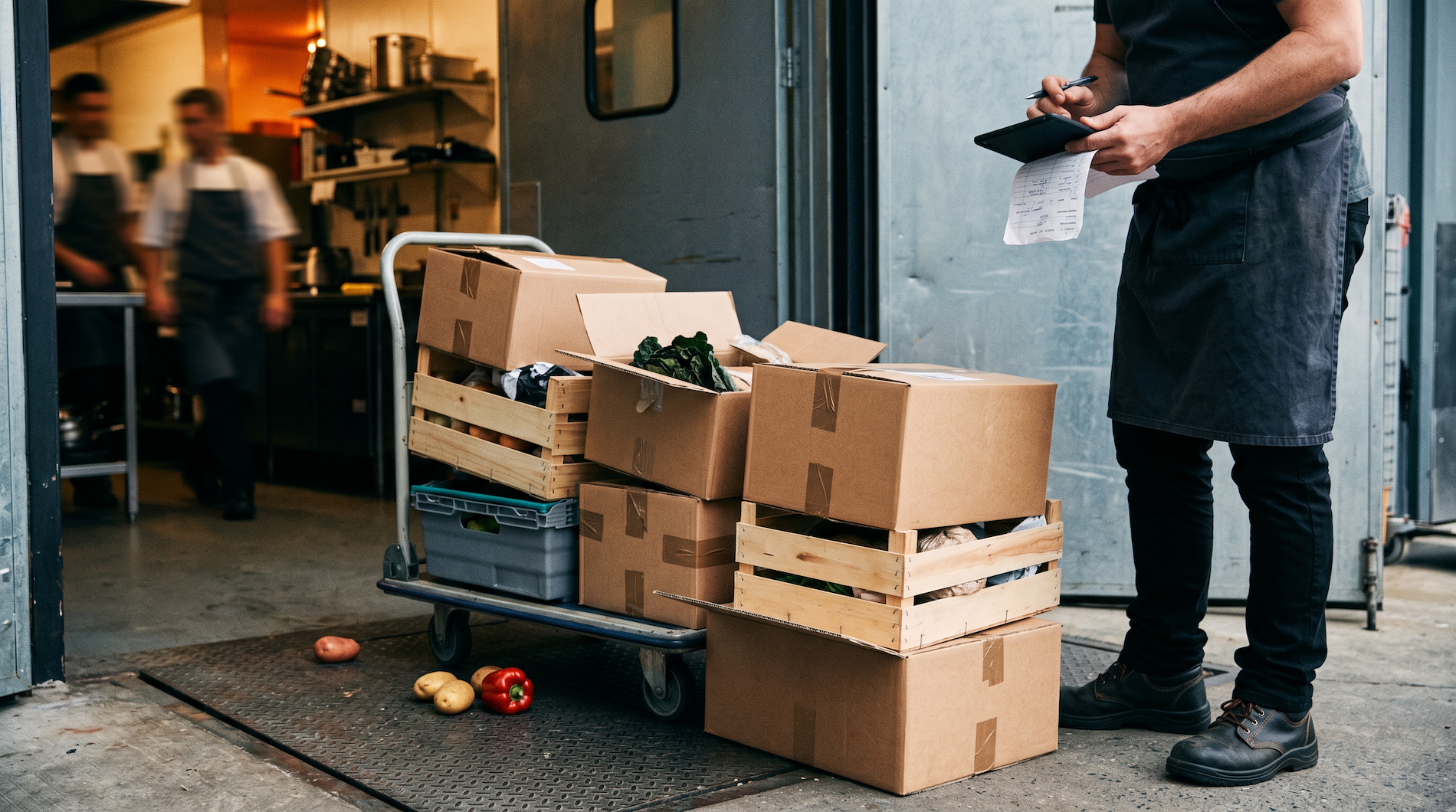






A price rise almost never arrives as a conversation. It turns up as a line on an invoice that looks like every other line, at a number nobody remembers agreeing to, and by the time you notice you have usually been paying it for a few weeks.
Spotting it is the part most articles stop at. What comes next is more interesting, because you have four ways to respond and they are not interchangeable. Picking the wrong one is how a small increase turns into a menu reprint.
Work Out What It Actually Costs You
Before deciding anything, put a number on it, and make that number what the rise costs you across a normal week. A quoted percentage on its own tells you very little.
Take the ingredient and multiply the price difference by the volume you genuinely get through. A core line moving from 6.50 a kilo to 7.28 is a 12 percent rise, which sounds serious. If you use forty kilos a week, it is 31 euros, which is a couple of covers. Across a year it is a little over 1,600 euros, which is worth an hour of your attention and not worth a panic.
Doing this consistently will surprise you in both directions. A frightening percentage on something you barely use is noise, and a modest percentage on a workhorse ingredient is often the biggest cost movement of your quarter. Percentages flatter small lines and hide big ones, which is why the weekly cash figure is the only version of this number worth acting on.
Deciding Whether It Is Worth Acting On
Two questions settle most cases.
Is it permanent? A seasonal move on produce reverses on its own, and rebuilding a dish around a February price is work you will undo in May. A structural change, whether that is a fuel surcharge, a tariff or a supplier repositioning themselves, is not coming back down.
Is it broad? One line moving is a supplier decision. Half your invoice moving in the same month is a market, and it needs a different response, because there is nothing to switch to and re-speccing one dish will not touch it.
If the rise is small, temporary and isolated, absorbing it is a legitimate answer and usually the cheapest one. The cost of reacting to every movement is real, and it is paid in your time and in menu churn your guests notice.
Re-speccing a Dish Without Changing What the Guest Gets
When the increase is worth acting on, this is where to look first, because it is the option with the least visible impact.
Re-speccing means adjusting the recipe so the dish costs less to produce while the guest experience holds. Sometimes that is a straight substitution to a different supplier’s version of the same product. More often it is a change in how the ingredient is used, so the expensive component moves from the centre of the plate to a supporting role, or the garnish that costs a euro a portion becomes something seasonal that costs twenty cents.
The discipline here is to be honest about what the guest actually notices. Nobody orders a dish for its garnish, and portion sizes on the sides can usually move a little without complaint. What people do notice is the protein shrinking or the quality of the headline ingredient dropping, so those are the last places to look and the ones most likely to cost you a return visit.
Whatever you change, recost the dish afterwards. A re-spec that was not costed is a rumour about a saving.
When Moving Supplier Is Worth the Disruption
Switching is the response people threaten and rarely make, and the reluctance is usually sound. A supplier relationship carries things that never appear on a price list: a delivery window that suits your prep, a driver who knows where the crates go, credit terms, and the willingness to sort out a short delivery without an argument.
It becomes worth it when the gap is wide and durable rather than a one-off. Before moving, price the whole basket instead of the one line that annoyed you, because a supplier who is dearer on the thing you noticed is often cheaper across everything else, and switching on a single line can cost you money overall.
It is also worth remembering that a genuine, priced alternative changes the conversation with your existing supplier. Most price rises have some room in them, and a restaurant that can say precisely what it uses, in what volume, and what the alternative costs is negotiating from a different position than one asking generally for a better deal.
Why Repricing Comes Last
Repricing works, and it is the option with the most friction attached. Menus get reprinted and guests notice, and the change is difficult to reverse if the underlying cost drops back.
That makes it the right answer for broad and permanent movements, or for the moment you are changing the menu anyway. If several dishes have drifted at once, repricing them together is far less noticeable than putting one dish up in isolation, and rounding a couple of prices up by fifty cents will usually recover more than a season of small savings elsewhere.
What does not work is repricing reflexively. A restaurant that moves prices every time an invoice moves ends up with a menu nobody trusts and a kitchen doing admin instead of cooking.
Catching the Rise in the Week It Lands
The whole sequence above depends on noticing the rise early and knowing what it touches, which is the part that usually fails. Stockifi reads supplier invoices line by line as they arrive, so a price movement shows up as a flagged change instead of something you find at year end. Because recipes are built on those same ingredient costs, the dishes affected recost immediately, and the question of which plates the rise landed on becomes a short list instead of an afternoon with a spreadsheet. That turns the four options here into a decision you can make in the week it matters. See how supplier price tracking works.
Frequently Asked Questions
How do I know if a supplier has raised prices? Compare the unit price on the current invoice against the last one for the same product and pack size. This is easy to miss by eye, because the invoice total often looks normal, so restaurants that catch price movements reliably are almost always tracking them automatically.
Should I always pass a price increase on to guests? No. Work out the weekly cash cost first. Small, temporary or isolated increases are usually cheaper to absorb or design around than to reprice, and repricing is best saved for broad movements or a planned menu change.
How much notice should a supplier give of a price increase? It depends entirely on your agreement, and many restaurants have no formal terms at all. If price stability matters to you, agree a notice period and a review cycle in writing, because a supplier who has committed to telling you in advance is much easier to hold to it.
Is it worth switching supplier over one ingredient? Rarely on its own. Price the full basket before moving, since a supplier who is expensive on one line is often competitive across the rest, and the switching cost lands on your kitchen rather than on theirs.
Making the Increase a Decision
What carries a restaurant through a bad year is catching each rise while there is still something to do about it. The prices on offer matter far less than the speed of the response. Put a weekly cash figure on the next increase that lands, ask whether it is permanent and whether it is broad, and work through the options in order of how much they disturb. Most of the time the answer will be smaller than the percentage made it sound.